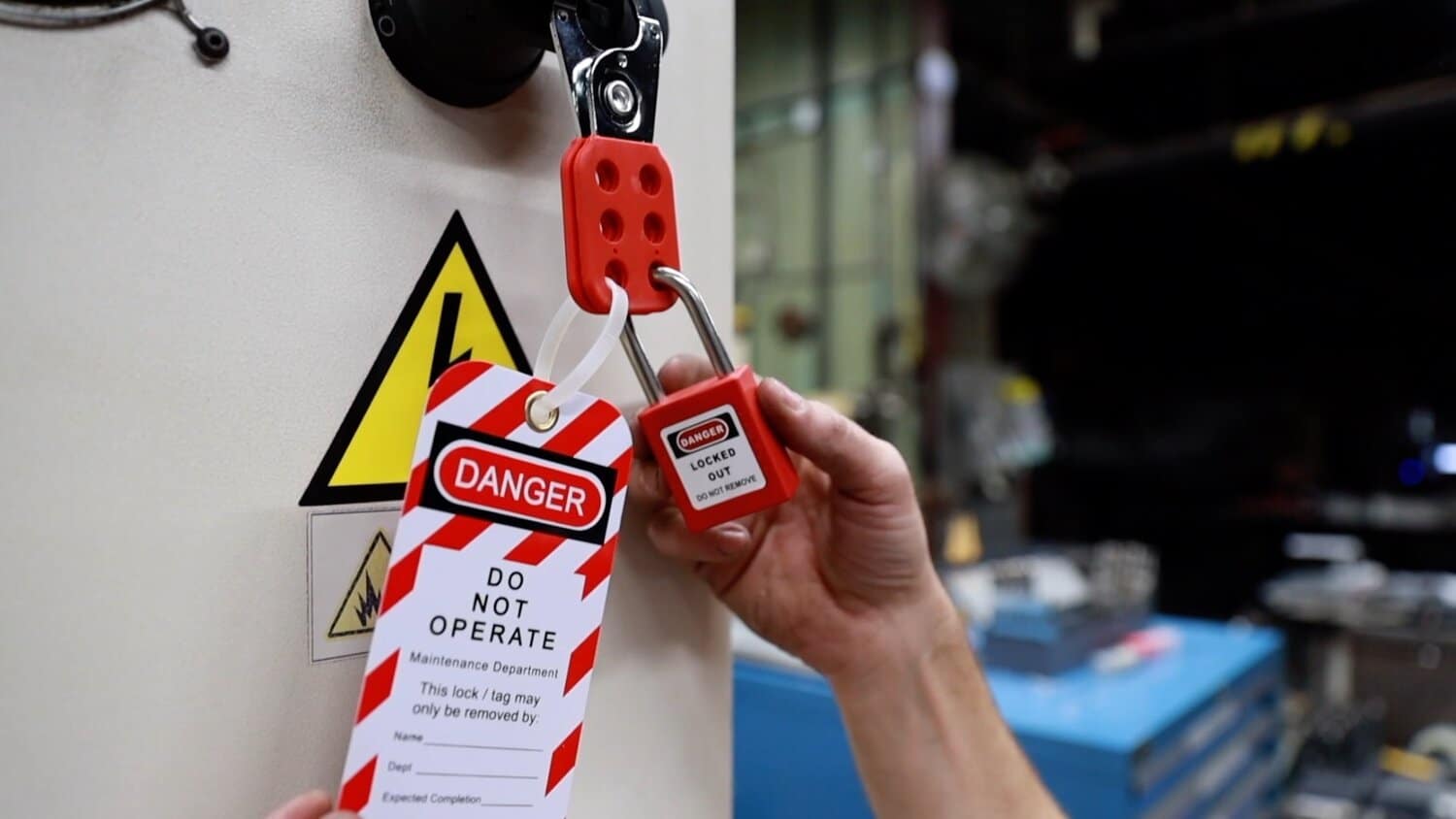
Machines don’t always warn before they kill. A conveyor restarts during maintenance. A press drops unexpectedly. A valve opens, releasing steam into a service zone. These aren’t rare failures—they’re preventable tragedies caused by one thing: failure to apply lockout tagout (LOTO) when it’s required.
LOTO is not a suggestion. It’s a procedural safeguard mandated by OSHA and recognized globally as the frontline defense against hazardous energy. But knowing what LOTO is doesn’t help if you don’t know when to apply it. Misjudging that moment risks lives.
This isn’t about theory. It’s about real-time decisions on factory floors, utility rooms, and maintenance bays—where the wrong call can mean crushed limbs, electrocution, or worse.
Here’s exactly when a lockout tagout procedure must be applied—and what happens when it’s ignored.
The Core Rule: Apply LOTO During Any Servicing or Maintenance
The fundamental rule is simple: Whenever an employee services or maintains equipment where unexpected energization, startup, or release of stored energy could cause injury, LOTO must be applied.
This applies regardless of the equipment’s size, industry, or perceived risk level.
Common scenarios include:
- Replacing a motor or drive belt
- Clearing a jam in a production line
- Repairing a hydraulic system
- Servicing electrical panels
- Cleaning internal components of machinery
Consider this real example: A packaging line jams. An operator reaches in to clear it while the machine is still connected to power. A coworker, unaware, hits the start button. The machine cycles—severing three fingers. This injury was preventable with LOTO. The machine should have been locked out before any hand entered the danger zone.
Key Insight: If a worker must bypass a safety guard, reach into a danger zone, or disassemble a component, LOTO is not optional—it’s mandatory.
When Routine Maintenance Crosses the LOTO Threshold
Not all maintenance triggers LOTO. That’s where confusion sets in.
OSHA makes a critical distinction: Minor tool changes and adjustments that are part of normal production are exempt—but only if they follow established routines, take minimal time, and use alternative protective measures (like point-of-operation guarding).
For example:
- Changing a drill bit on a CNC machine using a quick-release tool
- Adjusting a sensor alignment during operation with proper guarding in place
These tasks don’t require full LOTO if they’re routine, repetitive, and low-risk.
But the moment the task requires removing a guard, using a hand inside the operating zone, or working on energized components, LOTO applies.
A common mistake: A technician replaces a worn roller on a printing press. “It’ll only take two minutes,” they say. No lockout. But during the swap, a colleague resets the control panel remotely. The rollers engage. The technician loses two fingers.
Two minutes. Two fingers. Entirely preventable.
Rule of Thumb: If the task requires accessing a zone that would normally be protected by a guard or interlock, LOTO must be used—no exceptions.
Unexpected Energy Sources: Why LOTO Covers More Than Electricity
Many assume LOTO is only for electrical systems. That’s dangerously incomplete.
Hazardous energy includes:
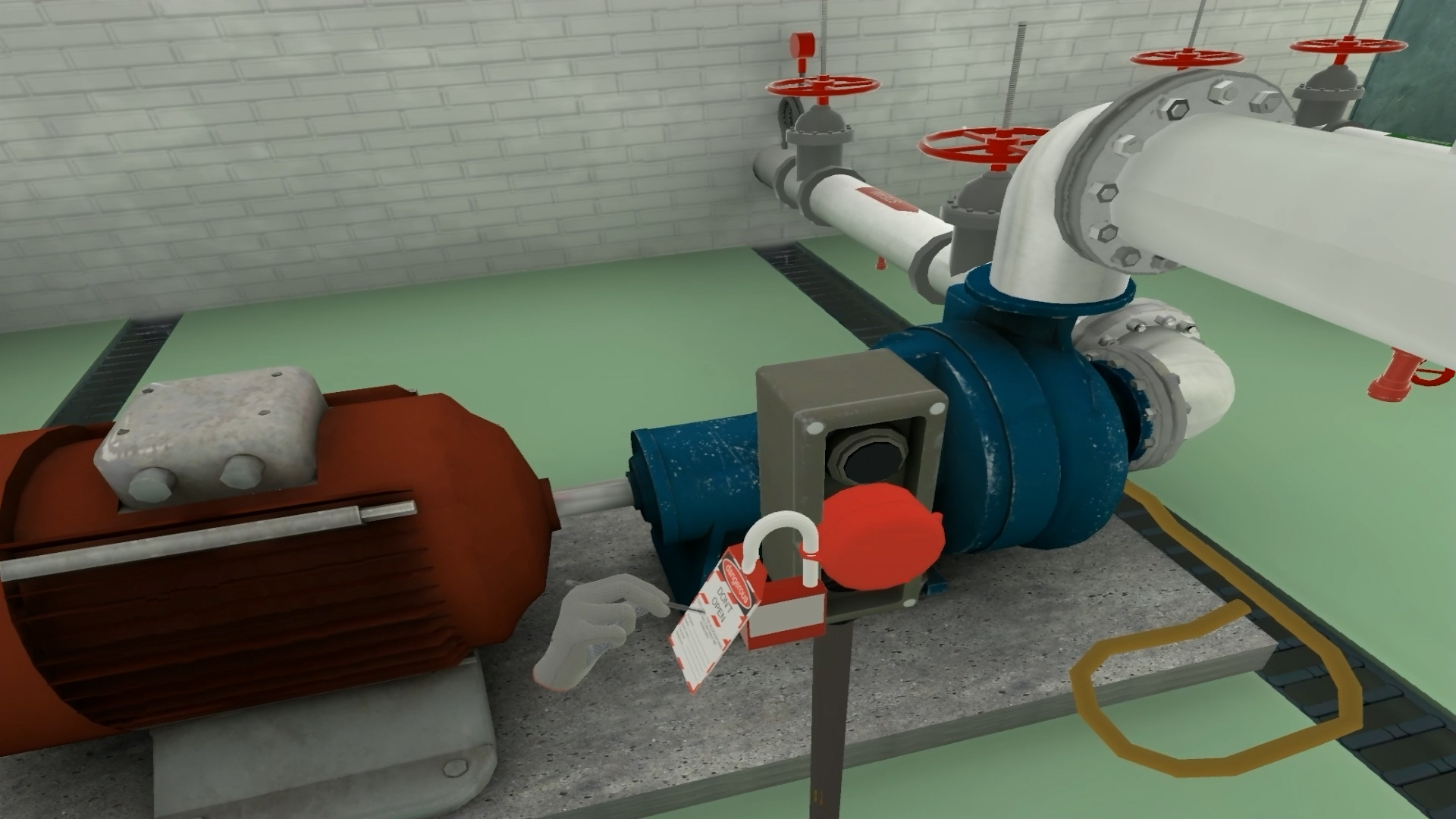
- Electrical
- Mechanical
- Hydraulic
- Pneumatic
- Chemical
- Thermal
- Gravitational
Each can kill.
For instance, a maintenance worker opens a hydraulic press valve without releasing stored pressure. The ram drops suddenly under 20 tons of force. The worker is pinned.
Or consider a furnace that’s been turned off—but the residual heat can still ignite a cleaning solvent. Without proper isolation and tagging, that’s a fire risk.
Real-World Case: In a food processing plant, a technician performed maintenance on a grain auger. The machine was powered down, but gravity-fed material above the auger shifted and started flowing. The auger blades activated due to mechanical momentum—trapping the worker’s arm.
Even though the power was off, gravitational and mechanical energy were still present. LOTO should have included blocking the material feed and securing the auger mechanism.
Critical Step: Always perform an energy audit before starting work. Identify all potential sources—not just the obvious ones.
Group Lockout Scenarios: When Multiple Workers Are Involved
LOTO becomes more complex when multiple technicians work on the same system.
Imagine a boiler shutdown for annual inspection. Electricians, pipefitters, and mechanics all need access to different parts of the system. Each brings their own lock.
This is a group lockout procedure. One authorized employee (the primary LOTO leader) coordinates the isolation, but every worker applies their personal lock to the energy-isolating device.
The machine stays locked out until every individual removes their lock.
Common failure: A supervisor removes all locks because “the job looks done.” One technician is still inside the combustion chamber. Restarting the system would be catastrophic.
The rule: One lock per person. No exceptions. No overrides.
Best practice: Use a group lockout board or hasp that holds multiple locks. Document who is working, what energy sources are controlled, and when the system will be re-energized.
Shift Changes and Handoffs: Maintaining LOTO Integrity Over Time
What happens when a night-shift technician starts a repair and a day-shift worker finishes it?
LOTO must survive shift changes.
OSHA requires a formal handoff procedure:
- Outgoing worker must brief the incoming worker on the status of the lockout
- The outgoing worker removes their lock only after the incoming worker applies theirs
- The new worker must verify isolation independently
Failure here leads to tragic assumptions.
Example: A maintenance worker begins a motor replacement at 3 p.m., locks out the circuit, and leaves at 11 p.m. The next day, a different technician sees the lock, assumes it’s for a different job, and removes it. When power is restored, the motor spins unexpectedly—damaging equipment and nearly injuring a bystander.
Lesson: LOTO tags must include clear information: who applied the lock, why, when, and contact details. A lock without a tag is just metal.
Temporary Repairs and “Quick Fixes” That Demand LOTO
In high-pressure environments, the phrase “let’s just fix it fast” is a red flag.
Temporary repairs, bypassing interlocks, or troubleshooting under power are high-risk behaviors.
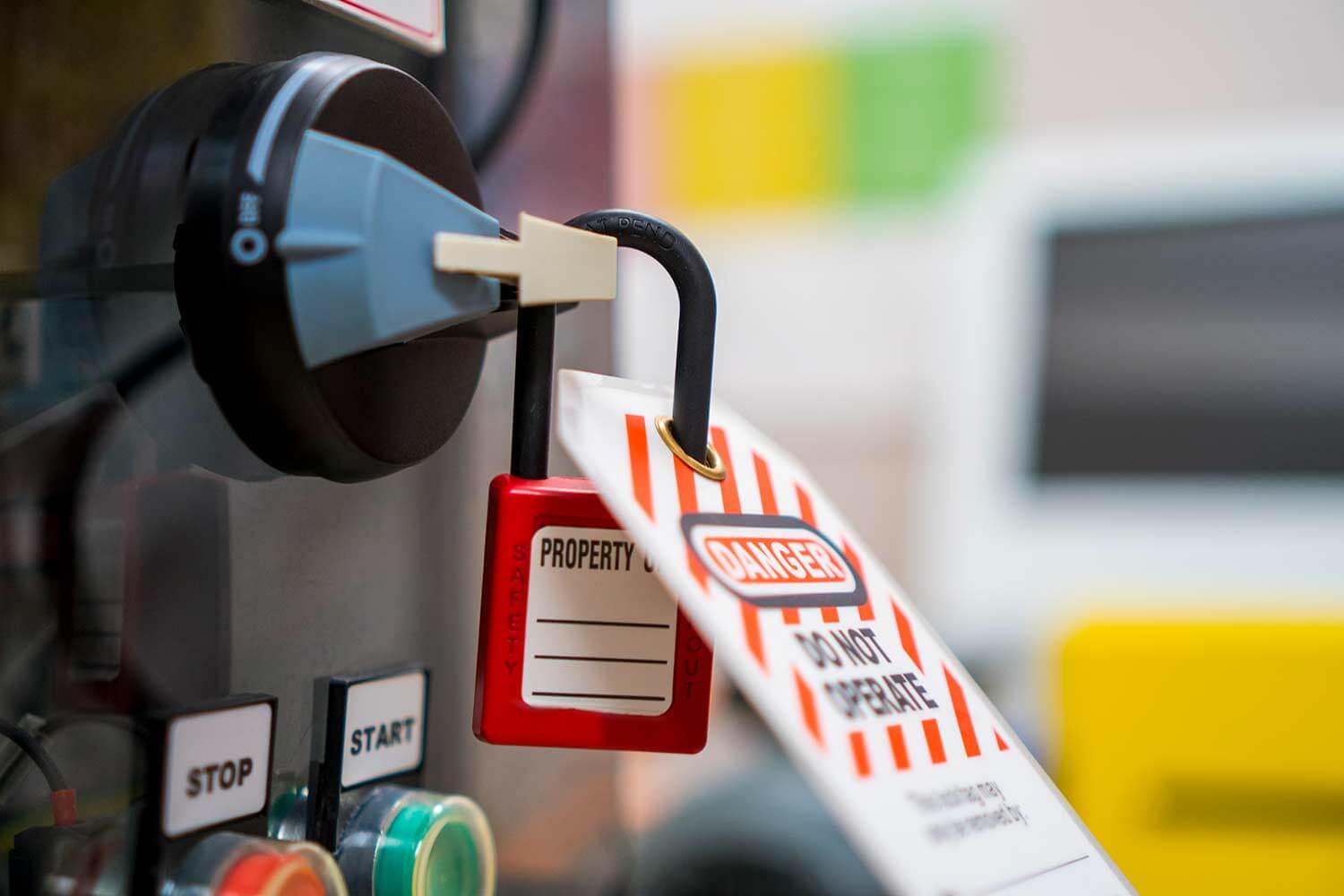
Any time a worker must access live components—even for diagnostics—LOTO procedures should be evaluated.
If energized work is absolutely necessary (e.g., voltage testing), it falls under energized electrical work rules, which require:
- Risk assessment
- PPE
- Safe work boundaries
- A documented energized work permit
But these are exceptions, not replacements for LOTO.
Too often, workers disable safety circuits to “test” a machine during repair. That’s not troubleshooting—it’s gambling with lives.
Hard Truth: There’s no such thing as a “safe” bypass. If the machine can start, it will start—when you least expect it.
When LOTO Applies Beyond Machinery: Valves, Pipelines, and Energy Isolation
LOTO isn’t just for machines with motors.
It applies to any energy-isolating device, including:
- Circuit breakers
- Disconnect switches
- Valve closures
- Block valves on gas lines
- Steam traps
- Hydraulic/pneumatic reservoirs
For example, a plumber must replace a section of high-pressure steam line. Before cutting, they must:
- Close the upstream valve
- Lock it in the closed position
- Tag it with their information
- Verify zero energy (e.g., bleed the line)
- Confirm no residual heat or pressure
Skipping any step risks explosion, scalding, or toxic release.
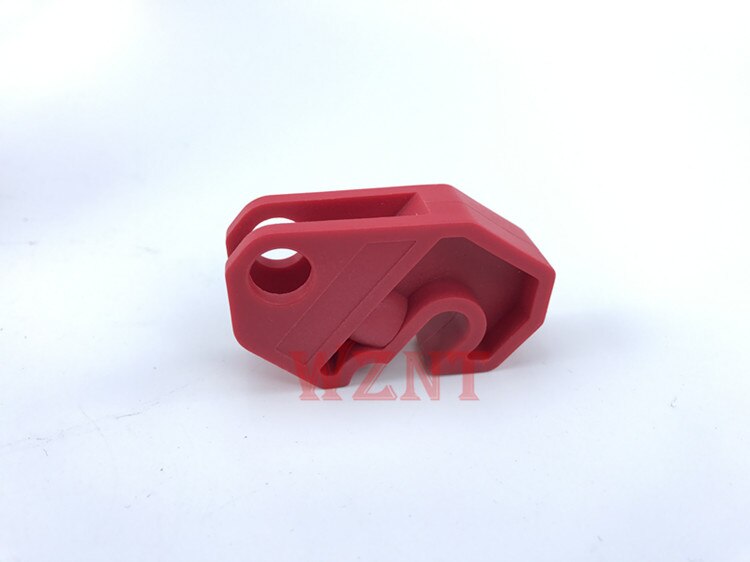
Best Practice: Use standardized lockout devices—like valve locks, breaker locks, and blank flanges—to ensure isolation is physical, not just procedural.
Common LOTO Mistakes That Lead to Injuries
Even trained teams make fatal errors. Here are the most common:
| Mistake | Consequence |
|---|---|
| Using one lock for multiple workers | One person can prematurely re-energize |
| Failing to verify isolation | Machine appears off but is still live |
| Poor tag information | Others don’t know why it’s locked |
| Skipping stored energy release | Springs, pressure, or inertia cause motion |
| Assuming “off” means “safe” | Control switches aren’t energy-isolating devices |
One plant reported a near-miss when a worker locked out a machine at a control panel switch. The motor wasn’t isolated—only the control circuit was. Someone else powered the motor directly, causing movement.
Key Rule: Always isolate at the energy source—not just the control point.
Building a Reliable LOTO Workflow: Practical Steps
To ensure LOTO is applied correctly and consistently:
- Identify all equipment requiring LOTO – Create an inventory with energy types and isolation points.
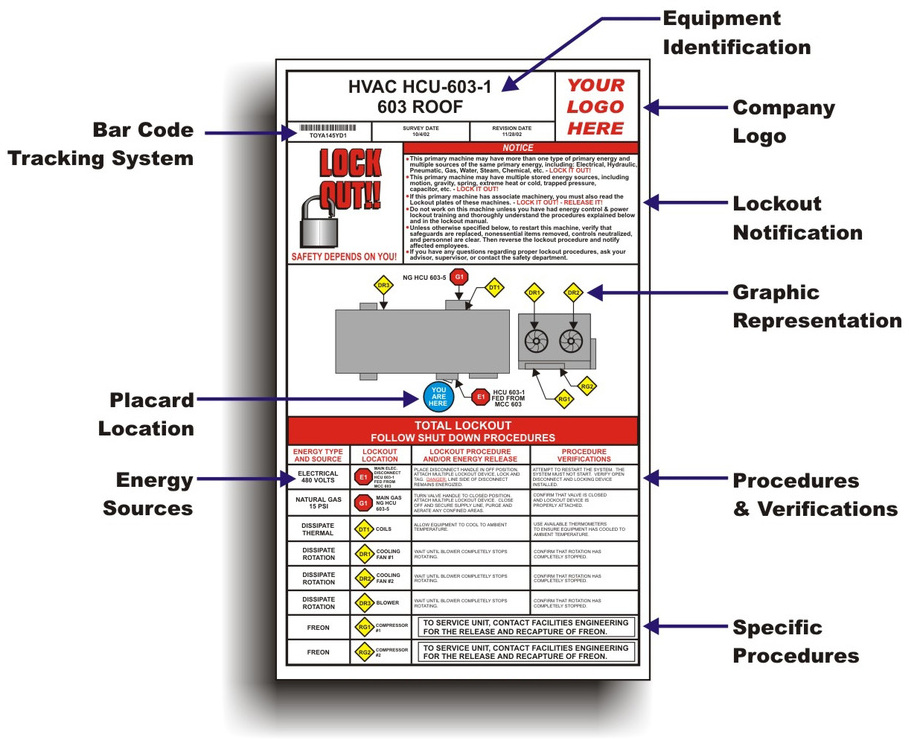
- Develop written procedures – Step-by-step instructions for each machine.
- Train authorized and affected employees – Authorized workers apply LOTO; affected workers must understand its purpose.
- Use standardized lockout devices – Color-coded locks, durable tags, hasps.
- Conduct periodic inspections – At least annually, audit LOTO practices.
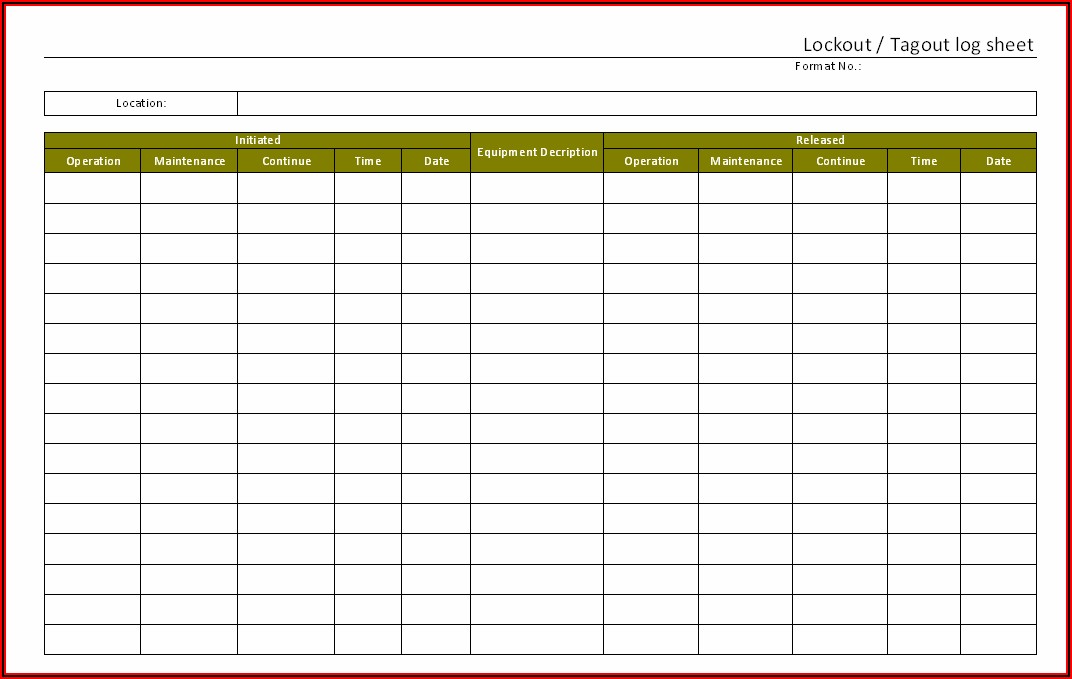
- Document every application – Who, when, what, and duration.
A steel fabrication plant reduced LOTO-related incidents by 90% in two years simply by introducing machine-specific LOTO checklists and mandatory verification steps.
Final Word: Apply LOTO When Safety Is Non-Negotiable
Lockout tagout isn’t bureaucracy. It’s a physical promise: This machine will not start while someone is working on it.
That promise must be kept every time—without exception.
Apply LOTO whenever maintenance, repair, or servicing creates exposure to hazardous energy. Whether it’s a 10-minute jam clearance or a 10-hour overhaul, the rule doesn’t change.
Lives depend on it.
Train rigorously. Enforce consistently. Verify relentlessly.
Because when the machine powers back on, everyone should walk away.
Frequently Asked Questions
When exactly should a LOTO procedure be applied? LOTO must be applied whenever employees service or maintain machines where unexpected startup or release of stored energy could cause injury.
Do routine adjustments require LOTO? Minor adjustments during normal production may be exempt if they are routine, rapid, and use alternative safeguards—but accessing danger zones requires LOTO.
Who can apply a LOTO device? Only authorized employees trained in energy isolation procedures can apply and remove lockout devices.
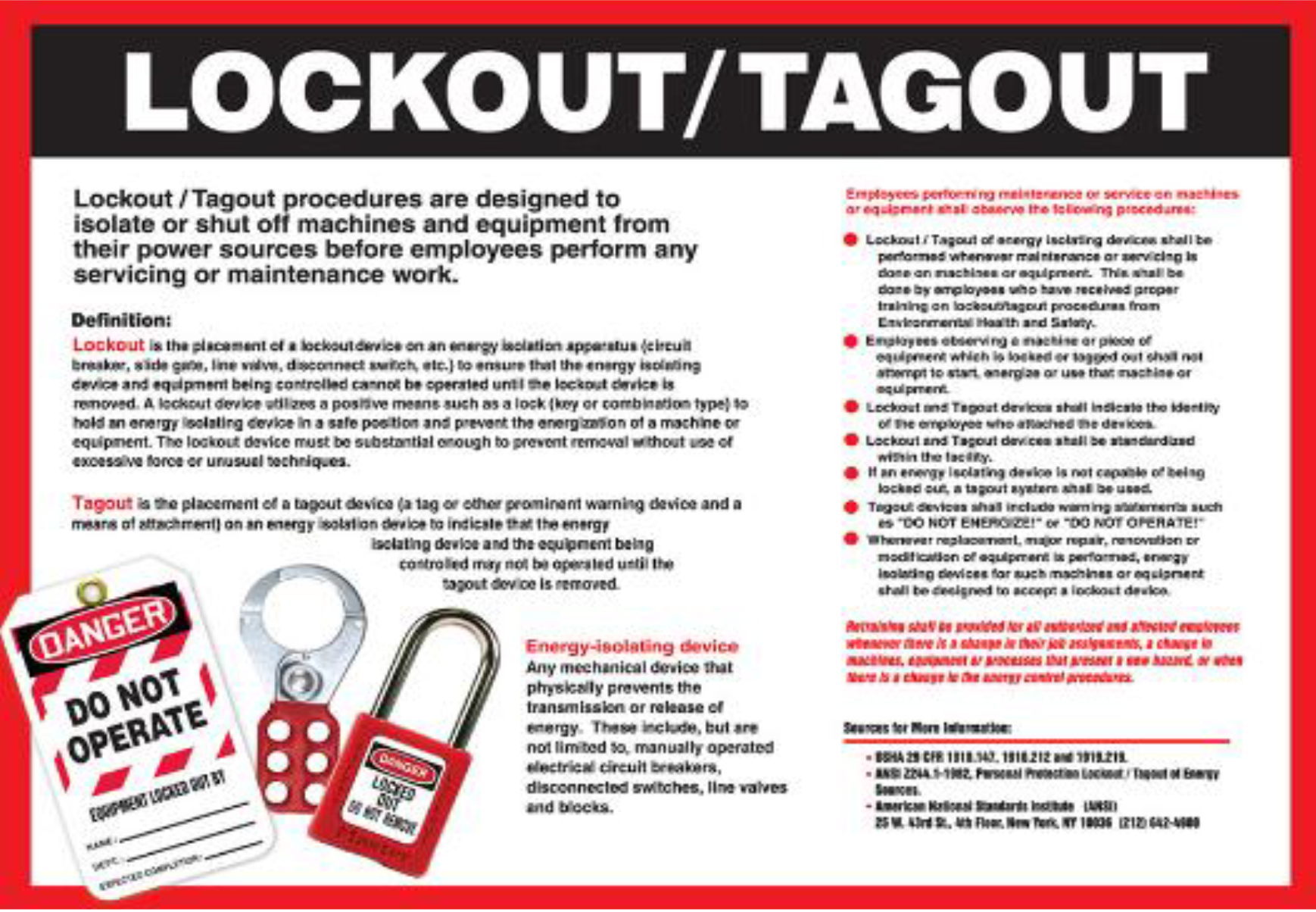
What’s the difference between lockout and tagout? Lockout uses a physical lock to prevent energizing; tagout uses a warning tag. Lockout is preferred; tagout alone is acceptable only if it provides equivalent protection.
Can multiple people work under one lock? No. Each worker must apply their own lock in group scenarios to ensure individual control over re-energization.
Does LOTO apply to corded equipment? Yes. Unplugging a machine can be part of LOTO if the plug is under the worker’s exclusive control and locked/tagged.
What if a machine doesn’t have a disconnect? Equipment must be modified to include an energy-isolating device. Until then, it should not be serviced unless equivalent protection is in place.
FAQ
What should you look for in When a Lockout Tagout LOTO Is Applied: Critical Use Cases? Focus on relevance, practical value, and how well the solution matches real user intent.
Is When a Lockout Tagout LOTO Is Applied: Critical Use Cases suitable for beginners? That depends on the workflow, but a clear step-by-step approach usually makes it easier to start.
How do you compare options around
When a Lockout Tagout LOTO Is Applied: Critical Use Cases? Compare features, trust signals, limitations, pricing, and ease of implementation.
What mistakes should you avoid? Avoid generic choices, weak validation, and decisions based only on marketing claims.
What is the next best step? Shortlist the most relevant options, validate them quickly, and refine from real-world results.