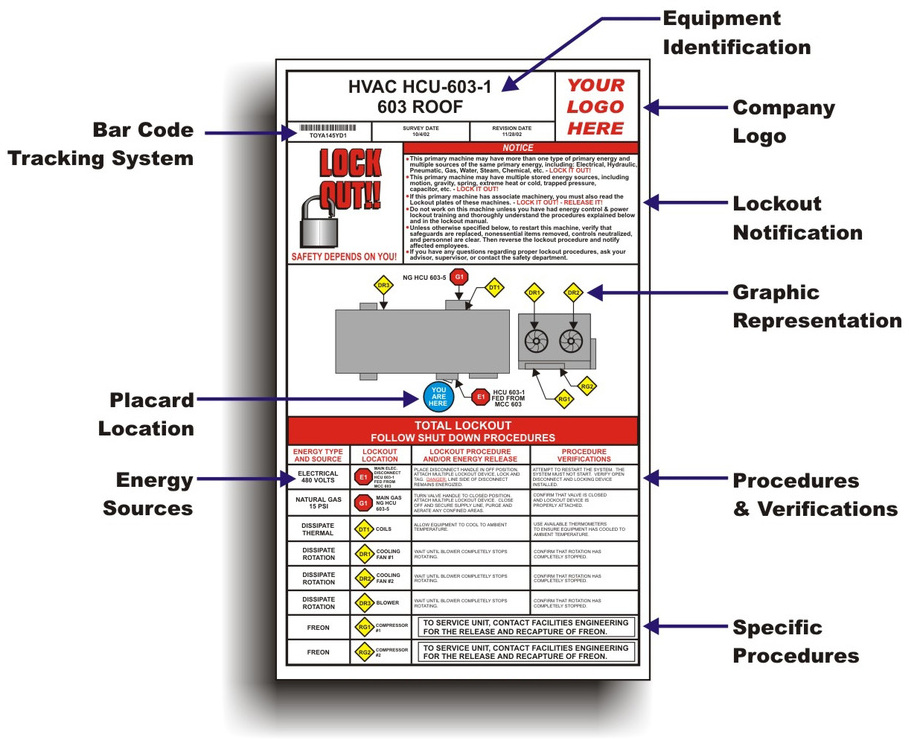
Workers get hurt every year not because equipment fails—but because it’s unexpectedly energized during maintenance. The solution isn’t luck or trust. It’s a documented, enforceable lockout tagout written procedure.
OSHA doesn’t just recommend these procedures—they mandate them under 29 CFR 1910.147. Yet, many facilities rely on verbal instructions, outdated PDFs, or generic templates that fail during audits and emergencies. A real lockout tagout written procedure doesn’t just check a compliance box. It defines exactly who does what, when, and how—turning safety into action.
This guide breaks down what a legitimate LOTO written procedure must include, where most organizations fall short, and how to build one that holds up under inspection and incident review.
Why a Written LOTO Procedure Is Non-Negotiable
Verbal instructions don’t scale. They don’t survive shift changes, training gaps, or high-pressure deadlines. A written lockout tagout procedure is the only way to ensure consistency across teams and compliance with federal standards.
Consider this: In 2023, OSHA cited a Midwest manufacturer for a fatal servicing incident. The root cause? No written LOTO procedure for a conveyor system. Workers assumed the master disconnect was sufficient. It wasn’t. The machine re-energized due to a hidden secondary power source—killing one technician.
A written procedure eliminates ambiguity. It answers:
- What energy sources must be controlled?
- Who is authorized to perform lockout?
- What sequence ensures complete isolation?
- How is verification confirmed?
Without these answers in writing, you’re relying on memory, not safety.
Core Elements of a Valid Lockout Tagout Written Procedure
A compliant LOTO procedure isn’t a paragraph in a manual. It’s a step-by-step protocol tailored to specific machines or equipment groups. Here are the seven essential components OSHA expects:
1. Machine or Equipment Identification
Each procedure must start by naming the exact equipment it applies to. This includes:
- Full equipment name and model
- Location (e.g., Production Line 3, West Wing)
- Unique ID or asset number
Example: “This procedure applies to the Allen-Bradley Model S-320 Hydraulic Press, ID# PB-320-07, located on the second floor Assembly Zone B.”
Generic procedures covering “all presses” fail because energy sources vary even within the same model line.
2. Type and Magnitude of Hazardous Energy
Workers can’t control what they don’t understand. The procedure must list all energy types present:
- Electrical (voltage level)
- Hydraulic (PSI, fluid type)
- Pneumatic (air pressure)
- Mechanical (springs, gravity)
- Chemical (pressurized lines)
- Thermal (heat retention)
Real-world mistake: A maintenance team locked out electrical power on a boiler but didn’t account for residual steam pressure. The release valve failed—scalding a worker during disassembly.
3. Shutdown Sequence
This is the first action step. It outlines how to safely stop the machine before isolation begins.
Steps typically include:
- Notify affected operators
- Bring machine to normal stop
- Shut off control circuits
- Allow moving parts to cease completely
Tip: Use bullet points, not paragraphs. Clarity beats completeness.
Do not skip: Some teams bypass shutdown and go straight to lockout. That’s dangerous. Uncontrolled shutdown can create unintended energization states.
4. Isolation of Energy Sources
This section lists every disconnect, valve, or block that must be secured. For each:
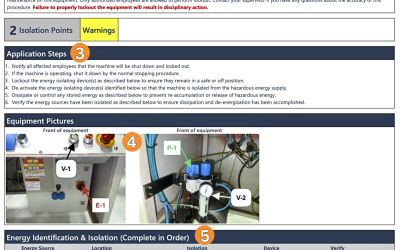
- Identify the isolation point (e.g., Circuit Breaker CB-42)
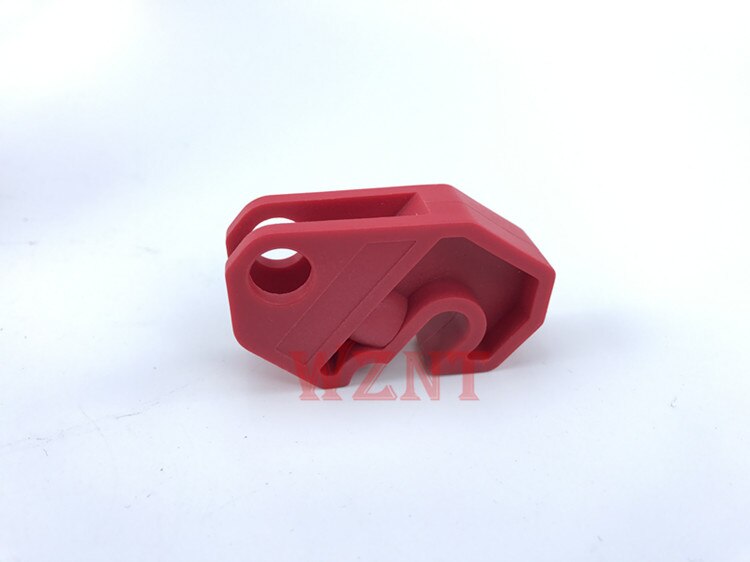
- Specify lockout device type (padlock, valve lock, circuit breaker lockout)
- Include lock application steps
- Example:
- Locate main disconnect panel behind Machine S-320.
- Switch CB-42 to OFF position.
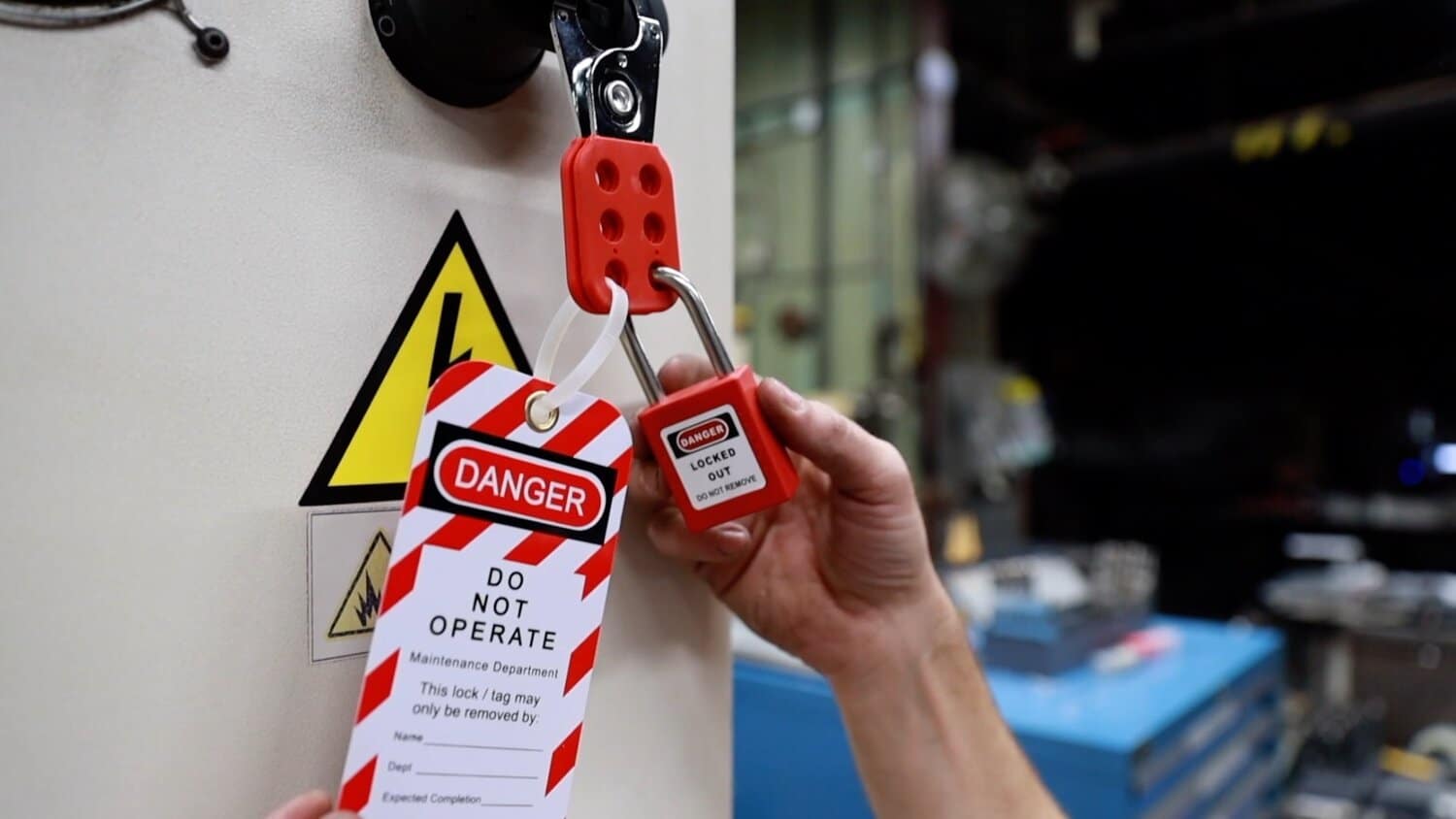
- Apply personal lock and tag to CB-42 handle.
- Close and lock hydraulic isolation valve HV-5 (yellow handle, near base of unit).
Avoid vague terms like “isolate power.” Be exact: which breaker, which valve, which lock.
5. Application of Locks and Tags
This section defines how locks and tags are used:
- Only the authorized employee applies their own lock
- Tags must include:
- Name of employee
- Date and time
- Reason for lockout
- Department
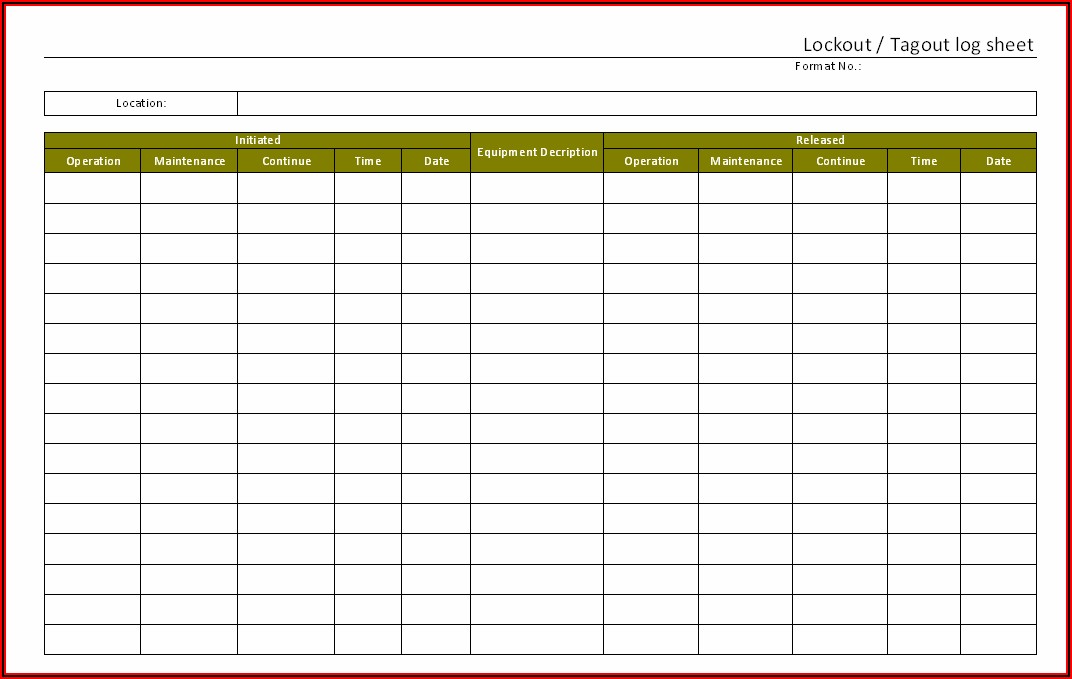
Critical gap: Many sites allow group lockout but fail to use a group lockbox. Without it, verifying who’s still locked out becomes guesswork.
6. Release of Stored Energy
After isolation, residual energy must be dissipated. The procedure must specify how:
- Bleed hydraulic lines using purge valve
- Ground high-voltage capacitors
- Block or lower suspended loads
- Allow cooldown for thermal systems
Checklist idea: Include a "Stored Energy Verification" line in the procedure: > ✅ Verified no pressure on gauge PG-3 (reads 0 PSI) > ✅ Confirmed capacitor bank discharged with multimeter
7. Verification of Zero Energy State
The final and most crucial step: proving the machine is safe.
The procedure should require:
- Attempting to energize the machine via normal startup (with safeguards bypassed only briefly and safely)
- Confirming no movement, sound, or power response
- Returning control to OFF or neutral
This isn’t optional. OSHA considers verification the defining action of an effective LOTO.
Common Flaws in Written LOTO Procedures
Even documented procedures fail when they’re not practical. Watch for these red flags:
- Overgeneralization: One procedure for “all grinders” ignores differences in power sources or lock points.
- Outdated diagrams: Locked-out valves or disconnects moved during upgrades, but the procedure wasn’t updated.
- Missing roles: Fails to clarify who initiates lockout, who verifies, and who restarts.
- No revocation process: Doesn’t define how and when a procedure is retired or revised.
- Language barriers: Written only in English, but 40% of maintenance staff are ESL.
Real incident example: A food processing plant had a written LOTO for mixers. But it didn’t mention the emergency stop circuit could be bypassed by remote HMI. During service, an operator restarted the machine from the control room—crushing the technician’s arm.
Fix: Procedures must reflect real-world control logic, not just physical disconnects.
How to Develop a LOTO Written Procedure: A Step-by-Step Workflow
Creating a compliant procedure isn’t a paperwork exercise. It’s a field-driven process.
Step 1: Conduct a Machine-Specific Energy Audit
Gather maintenance leads, safety officers, and operators. Walk up to the machine and:
- Map all energy inputs (power cords, pneumatic lines, hydraulic feeds)
- Identify all isolation points
- Note stored energy risks (flywheels, pressurized tanks)
Use a digital camera or tablet to label each point.
Step 2: Draft the Procedure
with Frontline Input
Write the first draft on-site, not in an office. Include:
- Photos of lock points
- Exact names of valves and breakers
- Sequence based on actual maintenance tasks
Have two authorized employees perform a dry run using the draft. Revise based on their feedback.
Step 3: Review and Approve
The EHS manager, lead maintenance supervisor, and a production rep should sign off. Include:
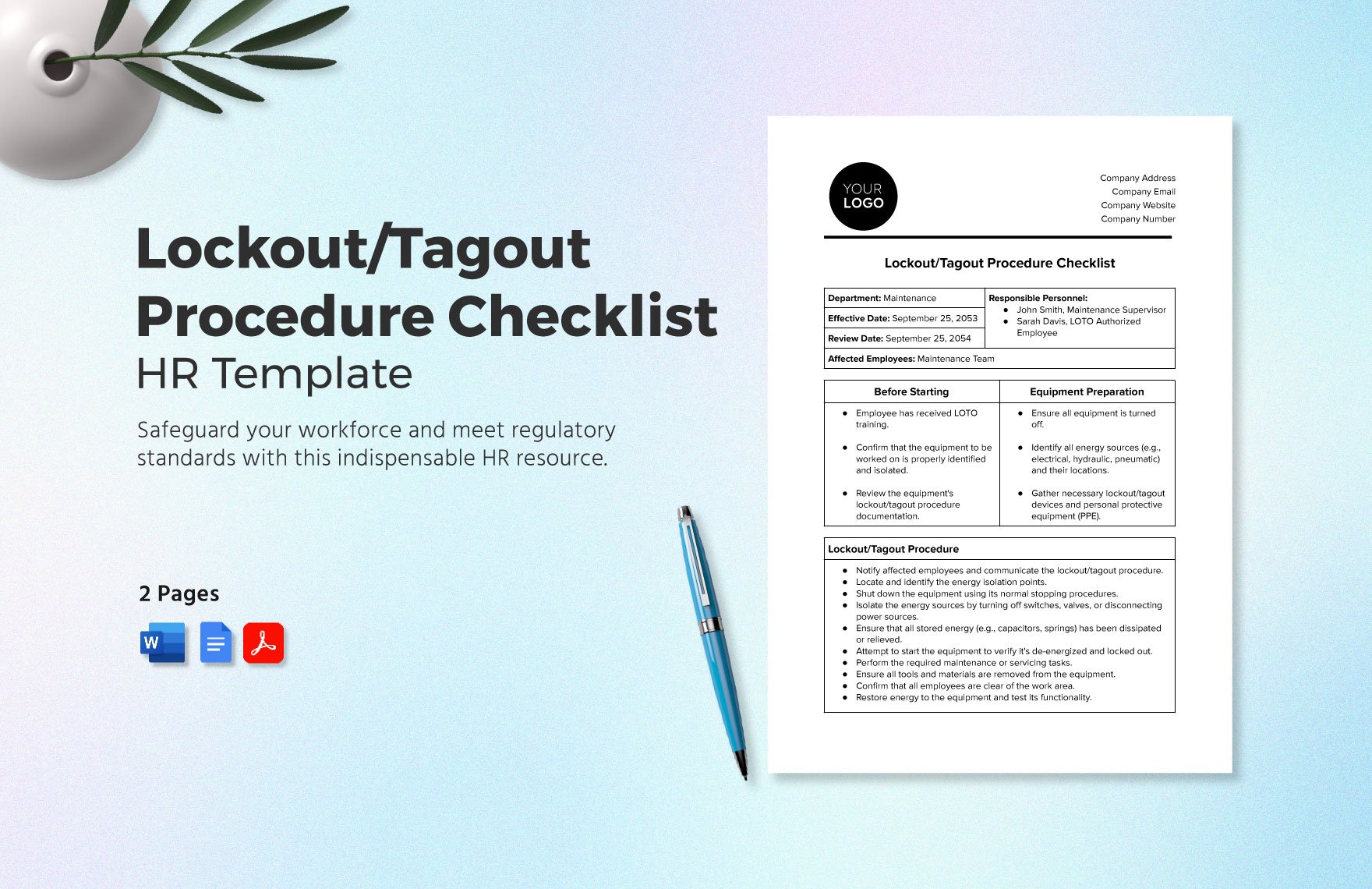
- Approval date
- Version number
- Review cycle (e.g., every 12 months or after modifications)
Store the final version in an accessible format—printed at the machine station and in digital safety portals.
Step 4: Train and Certify
Training isn’t “read the manual.” It’s hands-on. Employees must:
- Demonstrate lockout using the written procedure
- Identify all energy sources
- Verify zero-energy state
Document each employee’s competency with a signed checklist.
When to Update Your LOTO Written Procedure
A procedure isn’t static. Update it when:
- Equipment is modified (e.g., new motor, added automation)
- A near-miss or incident occurs
- New energy sources are introduced
- Maintenance practices change
- Annual audit reveals gaps
Pro tip: Assign a LOTO procedure owner—usually a maintenance lead or safety coordinator—responsible for tracking revisions and retraining.
Tools and Templates That Support Effective LOTO Procedures
While OSHA doesn’t endorse software, digital tools can improve accuracy and compliance tracking. Here are five practical options:
| Tool | Key Features | Best For |
|---|---|---|
| SafetyChain LOTO | Digital procedures, mobile access, audit trails | Mid to large manufacturers |
| Lockout Hub | Cloud-based LOTO management, real-time lock tracking | Facilities with mobile teams |
| EHS Insight | Integrated LOTO with incident reporting and training | Companies needing full EHS suite |
| Failsafe LOTO | Step-by-step mobile guides with photo verification | Visual learners and remote sites |
| Custom PDF + QR Codes | Print laminated procedures with scannable QR links | Low-tech environments on a budget |
Choose tools that integrate with your existing safety program—not replace human accountability.
Final Thoughts: A Written Procedure Is Only as Good as Its Use
A lockout tagout written procedure isn’t a document to file and forget. It’s a living part of your safety culture.
The best procedures are:
- Visible: Posted at or near the equipment
- Readable: Written in clear, simple language
- Actionable: Tested and used regularly
- Owned: Assigned to a responsible person
If your LOTO procedures are buried in a shared drive, written in legalese, or never practiced, they won’t protect anyone.
Start today: Pick one high-risk machine. Walk through it with your team. Draft a real step-by-step procedure. Test it. Revise it. Post it.
Safety isn’t compliance. It’s consistency.
FAQ
What is the OSHA standard for lockout tagout written procedures? OSHA 29 CFR 1910.147 requires employers to develop and implement a written energy control program, including machine-specific lockout procedures.
Who writes the lockout tagout procedure? Typically, a team including safety officers, maintenance supervisors, and authorized employees familiar with the equipment.
Do all machines need a separate written LOTO procedure? Yes, if they have multiple or complex energy sources. Similar machines with identical controls may share a procedure—but only after formal risk assessment.
Can a tag alone be used instead of a lock? Only if the lock can’t be applied and a documented exception exists. Tags are warning devices; locks are physical restraints.
How often should LOTO procedures be reviewed? At least annually, or whenever equipment changes, an incident occurs, or new hazards are identified.
What’s the difference between an authorized and affected employee? Authorized employees perform lockout and service equipment. Affected employees operate or use the equipment but don’t service it.
Can digital procedures replace paper LOTO instructions? Yes, if they’re accessible during servicing, tamper-proof, and include all required elements. Mobile access must not delay safety actions.
FAQ
What should you look for in Lockout Tagout Written Procedure: What You Must Include? Focus on relevance, practical value, and how well the solution matches real user intent.
Is Lockout Tagout Written Procedure: What
You Must Include suitable for beginners? That depends on the workflow, but a clear step-by-step approach usually makes it easier to start.
How do you compare options around Lockout Tagout Written Procedure: What You Must Include? Compare features, trust signals, limitations, pricing, and ease of implementation.
What mistakes should you avoid? Avoid generic choices, weak validation, and decisions based only on marketing claims.
What is the next best step? Shortlist the most relevant options, validate them quickly, and refine from real-world results.