When a technician opens an electrical panel, the silence can be deadly. Without verifying that the circuit is de-energized and secured, even a routine inspection risks arc flash, electrocution, or catastrophic equipment failure. Circuit breaker lockout tagout (LOTO) isn't just protocol—it's the last line of defense between routine maintenance and irreversible harm.
Across industries, electrical injuries persist not from ignorance of risk, but from inconsistent or incomplete energy control. A circuit breaker may appear off, but if it’s not physically locked and tagged, someone could flip it back on with a single action. That’s why a formal, documented LOTO procedure for circuit breakers is essential—especially in environments where multiple workers, shifts, or contractors are involved.
This article breaks down how circuit breaker LOTO works in real-world settings, the common oversights that compromise safety, and the steps to implement a reliable system that holds up under inspection and stress.
Why Circuit Breakers Need Lockout Tagout
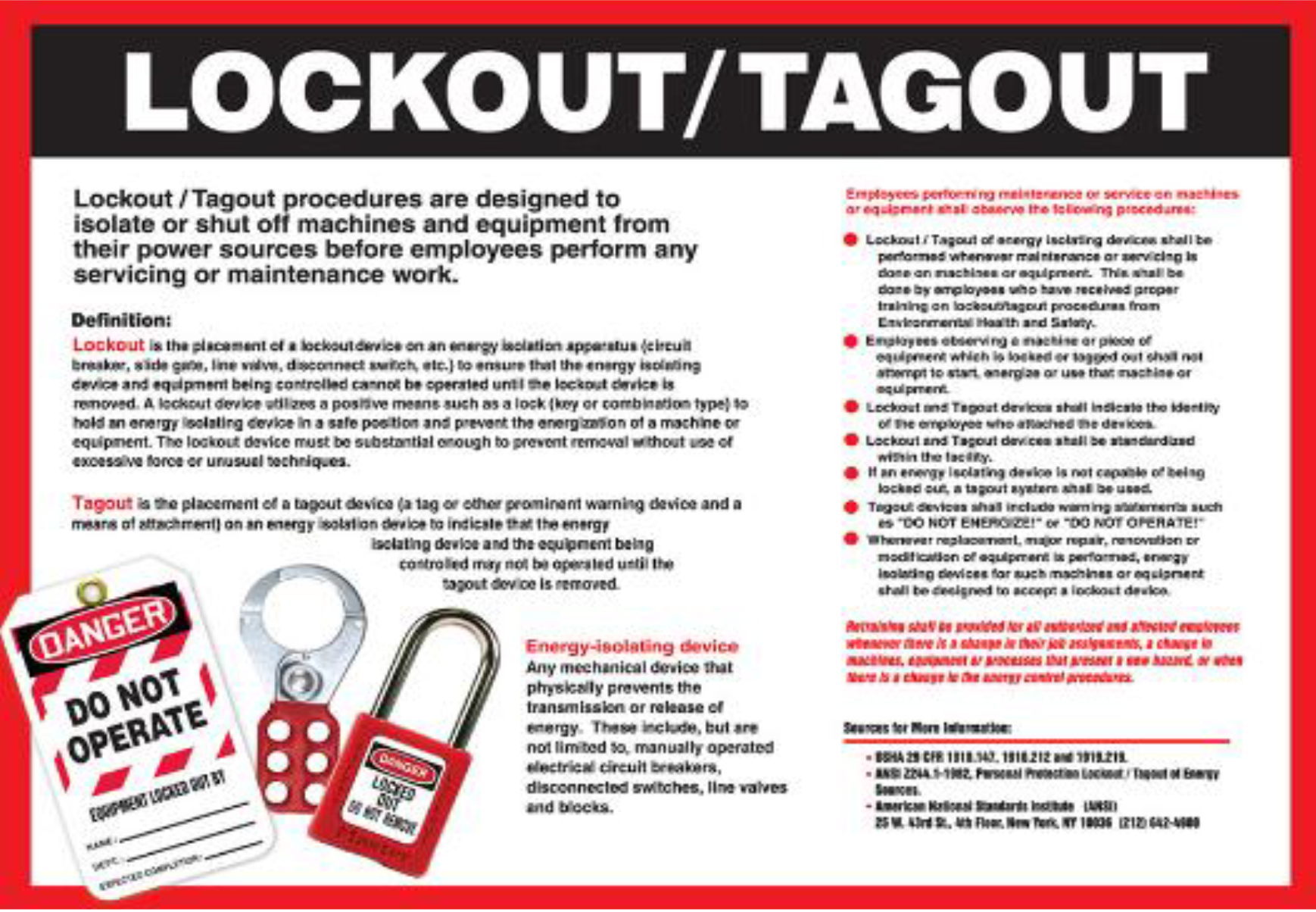
A circuit breaker is designed to interrupt current during overloads or faults. But its function as a protective device doesn’t make it a control device for maintenance. Under OSHA 29 CFR 1910.147, any energy-isolating device—from disconnect switches to breakers—must be capable of being locked out when servicing equipment.
Here’s the critical distinction: - Turning off a breaker ≠ Safe work condition - Locking and tagging the breaker = Controlled energy state
Breakers can be accidentally or intentionally re-energized. A night-shift electrician unaware of daytime maintenance, a janitor bumping a panel, or a supervisor overriding a shutdown order—all are real scenarios where LOTO prevents disaster.
Practical Example: At a food processing plant in Indiana, a maintenance worker began replacing a motor starter. The circuit breaker was switched off but not locked. A colleague, unaware of the work, restored power during a shift change. The worker suffered second-degree burns from an arc flash. Investigation revealed no formal lockout procedure existed for that panel. This incident was entirely preventable with proper circuit breaker LOTO.
How Circuit Breaker LOTO Works: Step by Step
A compliant circuit breaker lockout tagout process follows a strict sequence. Deviating—even slightly—reduces effectiveness and violates OSHA standards.
#### 1. Preparation Before any work begins, authorized personnel must: - Identify all energy sources feeding the equipment - Review equipment-specific LOTO procedures - Notify affected employees of the upcoming shutdown
Mistake to Avoid: Assuming one breaker controls everything. Complex systems may have backup feeds, control circuits, or capacitor banks that retain energy even after main power is off.
#### 2. Shut Down Equipment Use normal stopping procedures (buttons, switches) to halt machine operation. Confirm the equipment has stopped moving and processes have cooled or depressurized.
#### 3. Isolate Energy Sources Locate and open the correct circuit breaker(s). This step must be done at the source—often a main distribution panel or subpanel.
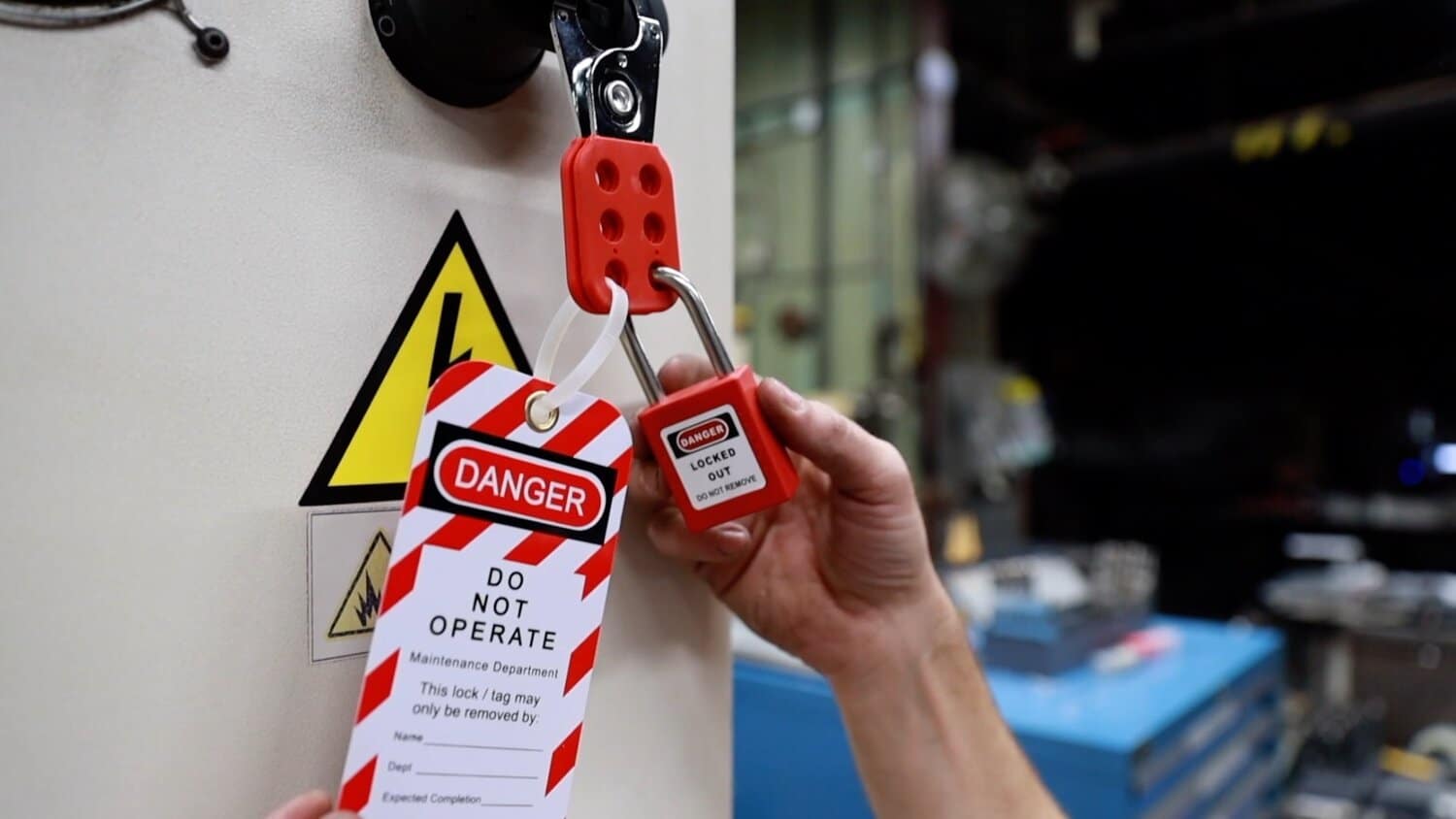
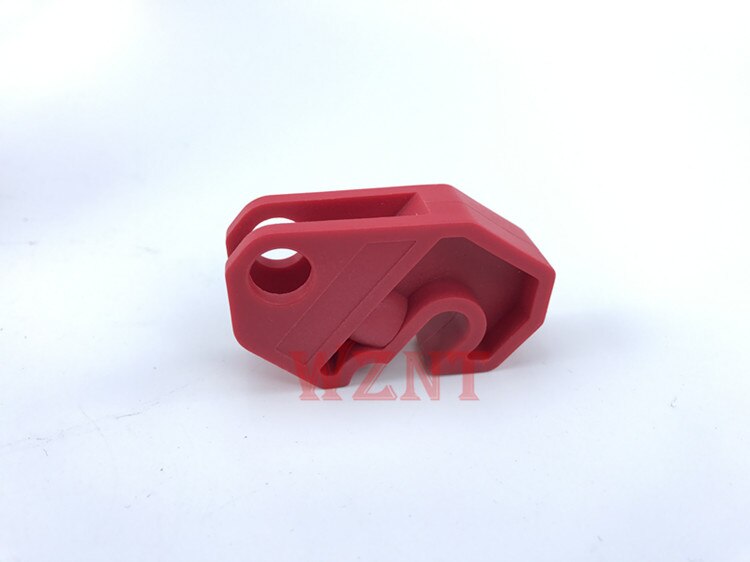
#### 4. Apply Lockout Devices Place a lockout hasp or breaker lock on the handle of the circuit breaker. Each worker involved in the task applies their own lock. This ensures no one can re-energize the circuit without their knowledge.
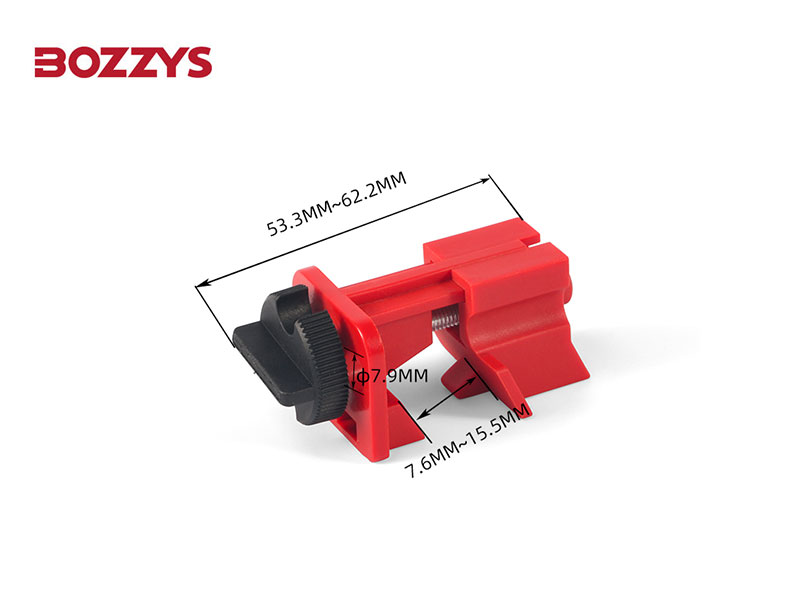
Popular lockout tools include: - Breaker lockouts (slip-on or strap-based) – Fit over breaker handles - Group lockout boxes – Allow multiple workers to lock out a single point - Tagout tags – Must include reason, date, time, and name of the person locking out
#### 5. Control Stored Energy Even with the breaker open, capacitors, springs, or magnetic fields can release energy. Discharge or block these sources before proceeding.
#### 6. Verify Zero Energy This is the most critical step. Using a properly rated voltage tester, check the circuit at the point of work—after the lockout. Test the tester on a known live source first (prove-test-prove method).
Real-World Tip: A facility in Ohio reduced electrical incidents by 70% after requiring two-person verification of zero energy state—one tester, one observer.
#### 7. Perform Maintenance Only after verification should work begin. Keep locks in place until all tools are removed and workers are clear.
#### 8. Remove Lockout and Restore Power After completion: - Confirm all workers are clear - Remove individual locks (only by the person who applied it) - Notify affected employees - Restore power using standard startup procedures
Common Circuit Breaker LOTO Mistakes
Even experienced teams make errors that undermine safety.
#### ❌ Using Tags Without Locks Tagout alone is not sufficient unless the device can’t be locked. Tags are easily ignored or removed. OSHA allows tagout-only systems only under strict conditions—including additional protective measures.
#### ❌ Locking the Panel Door, Not the Breaker A common shortcut. Closing and locking the electrical panel door does nothing if the breaker itself can still be operated. The lock must prevent the breaker handle from moving.
#### ❌ Sharing Locks or Keys Each authorized employee must have their own unique lock and key. Master keys or shared locks defeat the purpose of personal accountability.
#### ❌ Skipping Verification Assuming the circuit is dead because the breaker is off leads to complacency. Voltage testing is non-negotiable.
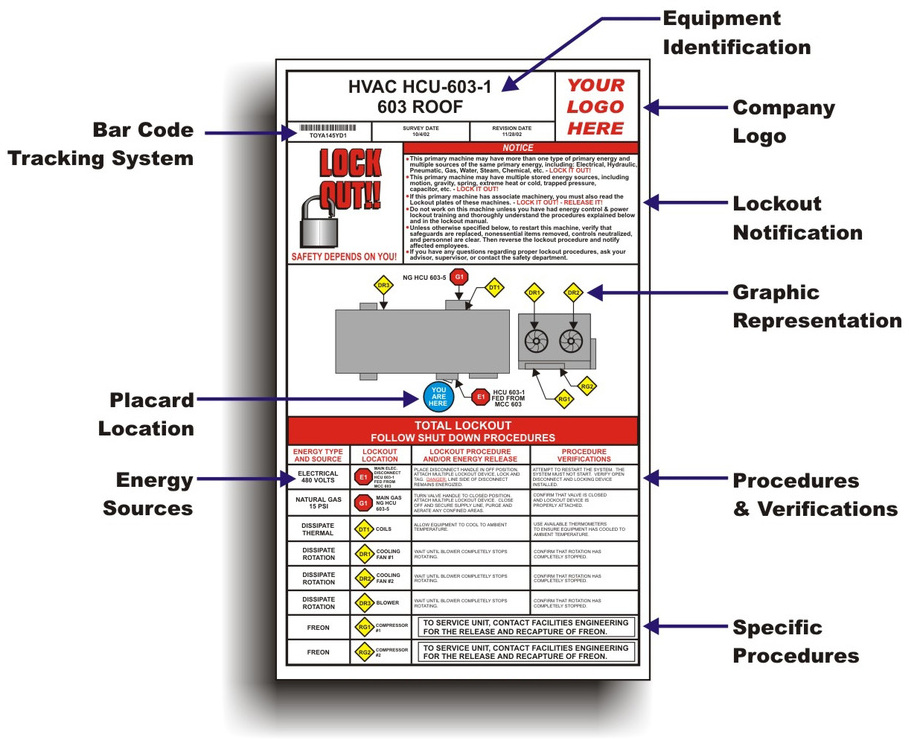
#### ❌ Incomplete Procedures Many facilities have generic LOTO plans but lack equipment-specific instructions. A 200A molded case breaker requires different handling than a 4000A power circuit breaker.
Equipment for Effective Circuit Breaker LOTO
The right tools make compliance practical. Here are five reliable options widely used in industrial and commercial settings:
| Product | Type | Key Feature | Best For |
|---|---|---|---|
| Brady BTL1-SL | Slip-on breaker lockout | Fits standard 1-inch breakers, UV-resistant | General maintenance |
| Master Lock 4690 | Adjustable strap lockout | Fits variable handle sizes, durable nylon | Multi-site use |
| Honeywell S-LOTO-1 | Group lockout station | Holds 6–12 locks, includes tags and forms | Team environments |
| Grace Industries G1000 | Bolt-on breaker lock | Permanently mounts to breaker, tamper-proof | High-risk areas |
| Ideal Industries LOTO Kit 89-036 | Complete kit | Includes locks, tags, hasps, tester | New program setup |
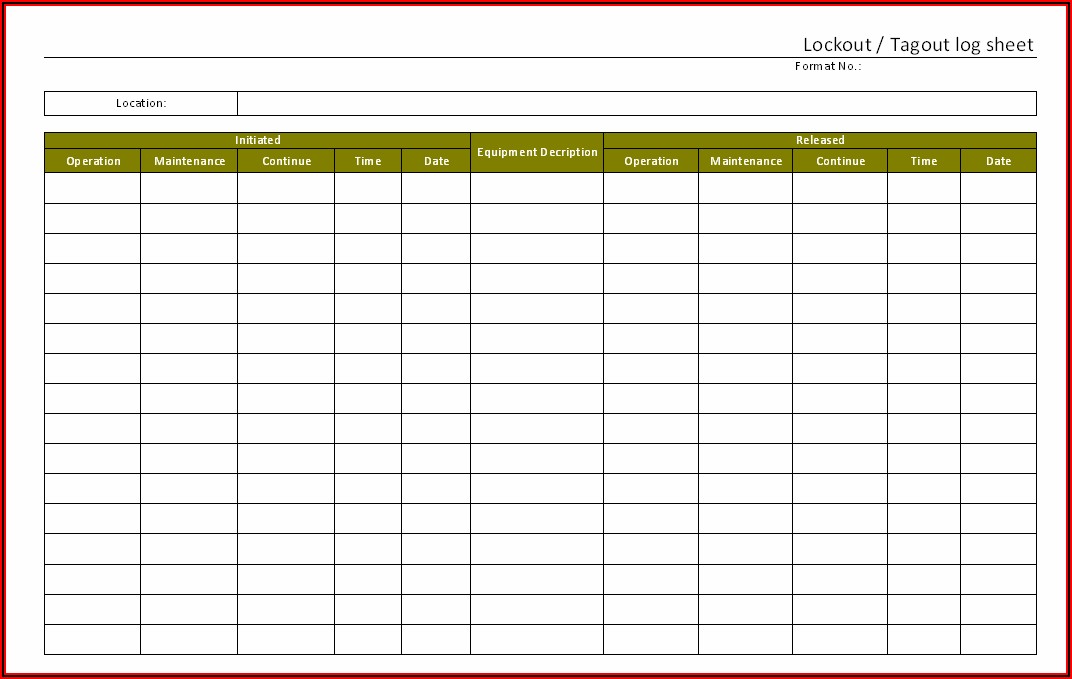
Pro Tip: Pair lockout devices with a digital LOTO log. Some facilities use QR-coded tags that link to procedure videos or work permits—blending physical and digital safety layers.
Special Considerations for High-Current or Molded Case Breakers
Not all breakers are the same. High-amperage or power circuit breakers (PCBs) add complexity.
Molded Case Circuit Breakers (MCCBs): - Common in commercial buildings and machinery - Typically have visible handles suitable for standard lockouts - May require padlock adapters if no built-in hole

Power Circuit Breakers (PCBs): - Found in switchgear, substations, and industrial plants - Often draw-out type (can be racked out) - Lockout requires racking lever control and primary disconnect isolation
Critical Rule: For draw-out breakers, locking the control power isn’t enough. The breaker must be racked to the "test" or "disconnected" position and physically secured with a racking lever lock.
OSHA Compliance and Audits: What Inspectors Look For
OSHA doesn’t just care that you have a LOTO program—they care that it’s effective.
During an audit, expect inspectors to: - Review written LOTO procedures - Observe a live lockout demonstration - Interview employees on their roles - Check lockout device condition and availability - Verify training records (refresher training every 12 months)
Red Flags for Auditors: - Blank or generic tags - Locks without identifiable ownership - No energy isolation points documented - Inconsistent application across shifts
A 2022 OSHA report cited LOTO violations as one of the top 10 workplace safety failures—costing companies an average of $14,000 per incident. More importantly, these lapses often precede serious injuries.
Building a Sustainable LOTO Culture
Equipment and procedures are only as strong as the culture behind them.
Actionable Steps to Strengthen LOTO: - Start with leadership buy-in. Supervisors must model compliance—no exceptions. - Conduct monthly spot checks. Randomly audit lockout applications and documentation. - Empower workers to stop work. Create a no-penalty environment for halting unsafe actions. - Use near-miss reporting. A technician noticing a missing lock should be encouraged to report it. - Integrate LOTO into onboarding. New hires should perform their first lockout under supervision.
One manufacturing plant reduced LOTO deviations by 90% in 18 months by introducing “safety champions”—employees trained to audit and mentor peers on proper procedures.
Final Thoughts: Safety Isn’t a Setting—It’s a Sequence
Circuit breaker lockout tagout isn’t just about attaching a lock. It’s about creating a repeatable, verifiable system that removes human error from energy control. In high-voltage environments, hesitation saves lives. Double-checking pays off. And the few extra minutes spent on proper LOTO prevent irreversible consequences.
If you manage maintenance, supervise technicians, or operate equipment, make sure every circuit breaker lockout follows the full procedure—every time. Not because OSHA requires it, but because someone’s life depends on it.
Start today: Audit one panel. Test one circuit. Verify one lock. Build the habit that keeps your team safe tomorrow.
FAQ
Can I use tagout instead of lockout on a circuit breaker? Only if the breaker can’t accept a lock and your company has a documented tagout-only program with extra safety measures.
Who can remove a lockout device? Only the authorized employee who applied the lock may remove it, unless a formal retrieval process is followed.
Do I need to lock out breakers during brief servicing? Yes, even minor tasks require LOTO if there’s exposure to hazardous energy.
What if the breaker is in a hard-to-reach location? Document the location in your LOTO procedure and ensure locks and tools are accessible—remote lockout stations can help.
Can multiple people work on the same circuit? Yes, using a group lockout box. Each worker applies their own lock before starting work.
Is LOTO required for battery-powered equipment? Yes, if the energy stored in batteries could cause injury during service.
How often should LOTO procedures be reviewed? At least annually, or whenever equipment changes or an incident occurs.
FAQ
What should you look for in Circuit Breaker Lockout Tagout: Safety That Can’t Be Switched Off? Focus on relevance, practical value, and how well the solution matches real user intent.
Is Circuit Breaker Lockout Tagout: Safety That Can’t Be Switched Off suitable for beginners? That depends on the workflow, but a clear step-by-step approach usually makes it easier to start.
How do you compare options around Circuit Breaker Lockout Tagout: Safety That Can’t Be Switched Off? Compare features, trust signals, limitations, pricing, and ease of implementation.
What mistakes should you avoid? Avoid generic choices, weak validation, and decisions based only on marketing claims.
What is the next best step? Shortlist the most relevant options, validate them quickly, and refine from real-world results.